
Impurity Profiling for Pharmaceutical and Biotechnology Industries
Impurity profiling is a critical component of any robust quality-control and regulatory strategy. Emery Pharma’s Impurity Analysis and Profiling Services deliver comprehensive detection, quantitation, and characterization of both organic and inorganic impurities, including degradation products, residual solvents, process-related impurities, and trace elemental contaminants. This ensures your drug substance or product meets stringent safety and regulatory requirements and supports both early-stage development and late-stage submission readiness.
We deliver two complementary offerings: Organic Impurity Analysis and Profiling and Inorganic (Elemental) Impurity Analysis. Together, they provide a full-spectrum impurity risk-management solution, enabling process optimization, safety assurance, and compliance under global guidelines such as ICH Q3, ICH M7, ICH Q3D, USP <232>/<233>, and related pharmacopoeial standards.
Impurity Profiling Services
To address different impurity risk profiles and regulatory expectations, Emery Pharma offers distinct analytical workflows for organic and elemental impurities, outlined below.

Organic Impurity Analysis and Profiling
Description
This service identifies, isolates, quantifies, and characterizes organic and degradation-related impurities (including residual solvents) in drug substances or drug products. It supports impurity analysis and profiling for process residues, degradants, residual solvents, and ensures compliance with ICH and USP standards.
Certain high-risk organic impurities, such as nitrosamines, may require compound-specific risk assessment and highly sensitive analytical methods beyond standard impurity profiling. For these cases, please see our dedicated
Nitrosamine Impurity Analysis Services
.
Profiling Methodology
Emery Pharma uses a combination of chromatographic (HPLC / UPLC), spectrometric (LC-MS/MS, HRMS), nuclear magnetic resonance (NMR), and GC-MS techniques. For residual-solvent analysis, GC-MS (or GC with appropriate detectors) may be applied; for degradants or process-related impurities, LC-MS/MS or HRMS combined with chromatographic separation enables both detection and accurate quantitation. Structural elucidation for unknown impurities may be supported by NMR and high-resolution mass spectrometry as needed.
Impurity Testing Deliverables
- Quantitative impurity profiles (e.g., levels of degradants, residual solvents)
- Structural identification (mass spectra, NMR spectra, when applicable)
- Chromatograms, spectral data, and analytical interpretation
- Regulatory-ready impurity analysis report, suitable for ICH Q3 / M7 compliance and submission dossiers

Elemental Impurity Analysis (Inorganic / Trace Metals)
Description
This service measures elemental impurities (trace metals, heavy metals, elemental contaminants) in drug substances, excipients, or finished drug products, ensuring that their levels comply with regulatory elemental impurity limits.
Methodology
Using Inductively Coupled Plasma Mass Spectrometry (ICP-MS), a highly sensitive atomic spectrometry technique, Emery Pharma quantifies trace metals and elemental contaminants in accordance with guidelines for elemental impurities (e.g., ICH Q3D(R2), USP <232>/<233>, Ph. Eur. / JP monographs). Sample digestion or preparation is performed (e.g., wet-chemical digestion or microwave digestion) as appropriate for the matrix. ICP-MS enables detection of elements at ultra-trace levels, enabling robust quantitation even at low ppm/ppb thresholds.
Deliverables
- Quantitative elemental impurity data (concentrations of relevant metals / elements)
- Summary of elemental impurity screening results with comparison to regulatory limits (PDEs)
- Validation or method qualification report (if method development required)
- Regulatory-ready impurity compliance report (suitable for inclusion in CMC, stability, or batch-release documentation)
Other Related Services
Benzene Impurity Analysis – Specialized analytical testing for the detection and quantitation of benzene impurities in drug substances and drug products, supporting compound-specific risk assessment and regulatory compliance.
Request Your Impurity Profiling
Our Scientists

Dr. Prajita Pandey, Ph.D. is an analytical chemist and Associate Director of the Chemistry Department at Emery Pharma, where she supports impurity analysis, biologics characterization, and protein analysis through advanced analytical method development and validation. She has extensive experience applying LC-MS and LC-HRMS techniques to the characterization of complex biomolecules, including monoclonal antibodies, ADCs, peptides, and proteins.
News & Blog Articles
projects delivered on time
average lead time for study initiation
response time to new requests
-

Applicable Standards
ICH Q3A/B/C, ICH M7(R2) (organic impurities); ICH Q3D(R2), USP <232>/<233>, EP 5.20 / JP 2.66 (inorganic impurities)
-

Target Product / Molecule Type
Small Molecules, Biologics, Peptides
-

Instrumentation & Analytical Platforms
HPLC, UPLC, LC-MS/MS, HRMS, NMR, GC-MS, ICP-MS
-

Sample Requirements
Variable, depending on the scope and complexity of analysis
Why Choose Emery Pharma for Impurity Analysis and Profiling
-
GLP/GMP Compliance
Our impurity analysis and profiling workflows are built around validated analytical methods and quality-system oversight to provide regulatory-grade data and compliance-ready reports. -
Regulatory Expertise
With deep familiarity across global impurity standards (e.g., ICH Q3A/B/C, ICH M7, ICH Q3D, USP <232>/<233>, EP/JP monographs), we understand the thresholds, documentation, and risk-assessment processes required for successful pharmaceutical submissions. -
Breadth of Instrumentation and Methodologies
Because we offer both organic impurity analysis (HPLC/UPLC, LC-MS/MS, GC-MS, NMR) and elemental impurity analysis via ICP-MS under one roof, you avoid coordinating multiple vendors — simplifying project management and accelerating decision-making. -
Cross-Industry and Multi-Molecule Experience
Whether your candidate is a small-molecule API, peptide, biologic, or formulation, our impurity analysis services are designed to address a wide range of compound types and development stages. -
Integrated Risk Mitigation & Regulatory Readiness
By combining impurity detection, structural elucidation, quantitation, and regulatory-compliant reporting, we help you proactively manage impurity risk and support smooth regulatory filings.
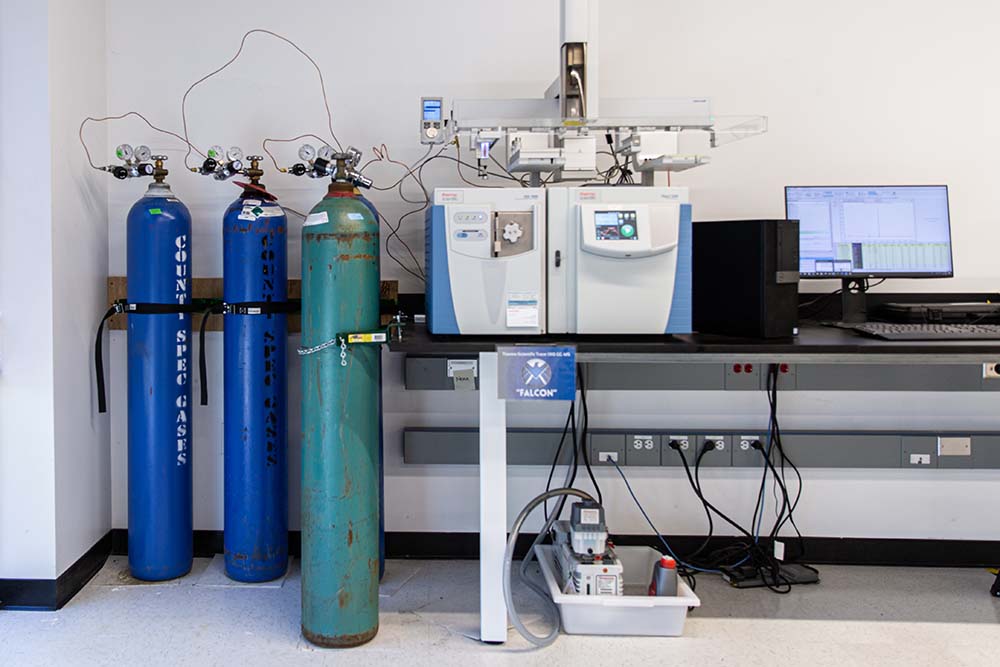
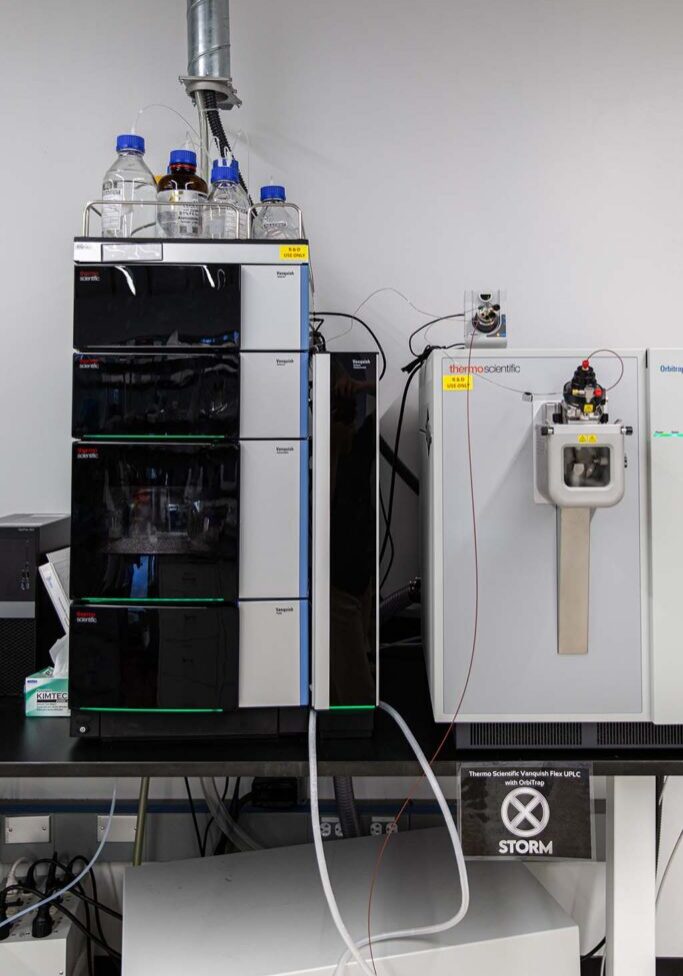
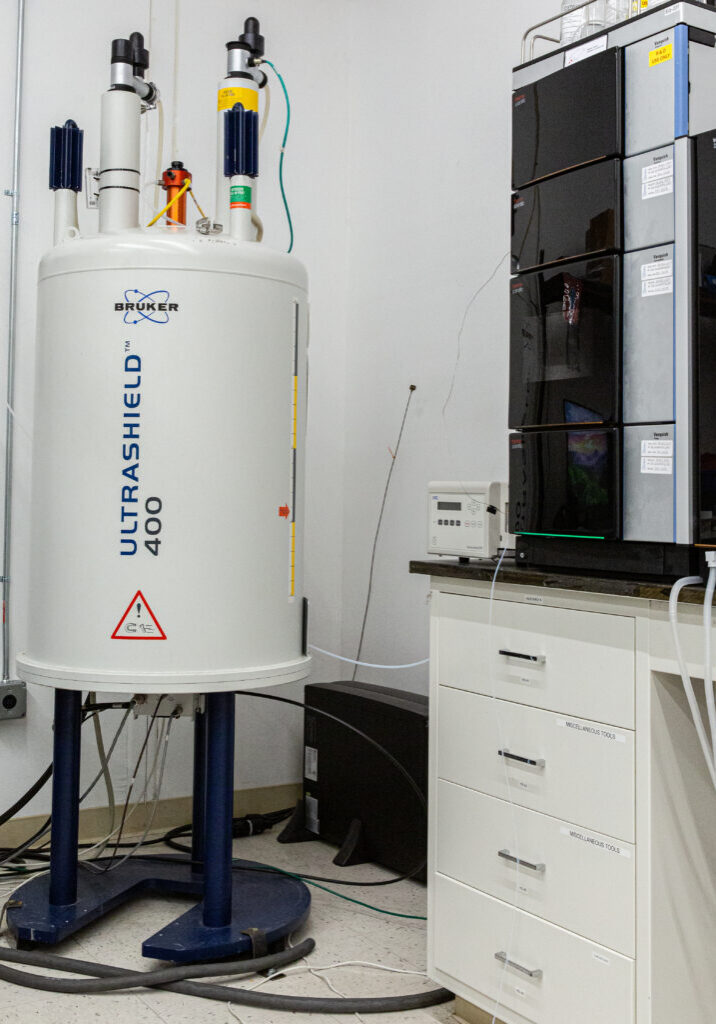
State-of-the-art instruments used in impurities testing.
Top: GC-MS, Bottom Left: HR LC-MS, Bottom Right: NMR
Request Your Impurity Profiling
Common Impurity Profiling Questions
What types of organic impurities are detected and characterized?
Organic impurity profiling focuses on three critical categories: Degradation Products (breakdown products from the API), Process-Related Impurities (synthetic by-products, unreacted starting materials, or reagents), and strictly limited Residual Solvents (volatile organic chemicals like methanol or acetone).